
Ask anyone who’s moved into a 1BHK in Mumbai, a studio in Bangalore, or a compact flat in Pune what their biggest furnishing headache was, and you’ll get some version of the same answer: everything has to fit, and it has to fit exactly. There’s no room for furniture that’s oversized, overweight, or over-budget. Every inch of a small home has to earn its place.
That pressure has quietly reshaped what kind of furniture people are buying, and particleboard has ended up right at the center of it, not by accident, but because it happens to solve almost every problem compact living creates.
The Small-Home Boom Isn't Slowing Down
Urban India has been shrinking, home-wise, for a while now. Property prices in metros have pushed average apartment sizes down, while more young professionals and small families are choosing compact, well-located flats over larger homes further from the city centre. Add to that the rise of co-living spaces, serviced apartments, and rental housing aimed at students and single working professionals, and you’ve got a huge and growing segment of people furnishing genuinely small spaces.
Traditional solid-wood furniture was never really designed with this in mind. It’s heavy, it’s expensive per square foot of function, and it doesn’t adapt well to multi-purpose use. A compact home doesn’t need a hulking teak wardrobe; it needs something smart, light, and precisely sized.
Why Particleboard Fits the Brief
It’s light without giving up strength. Solid wood furniture, especially anything substantial, gets heavy fast. That’s a real problem in small apartments where furniture regularly needs to be shifted, rearranged, or moved between rooms to make the most of limited space. Particleboard furniture is considerably lighter to move around while still holding up fine under everyday use, an easy trade-off for anyone living in 400-500 square feet.
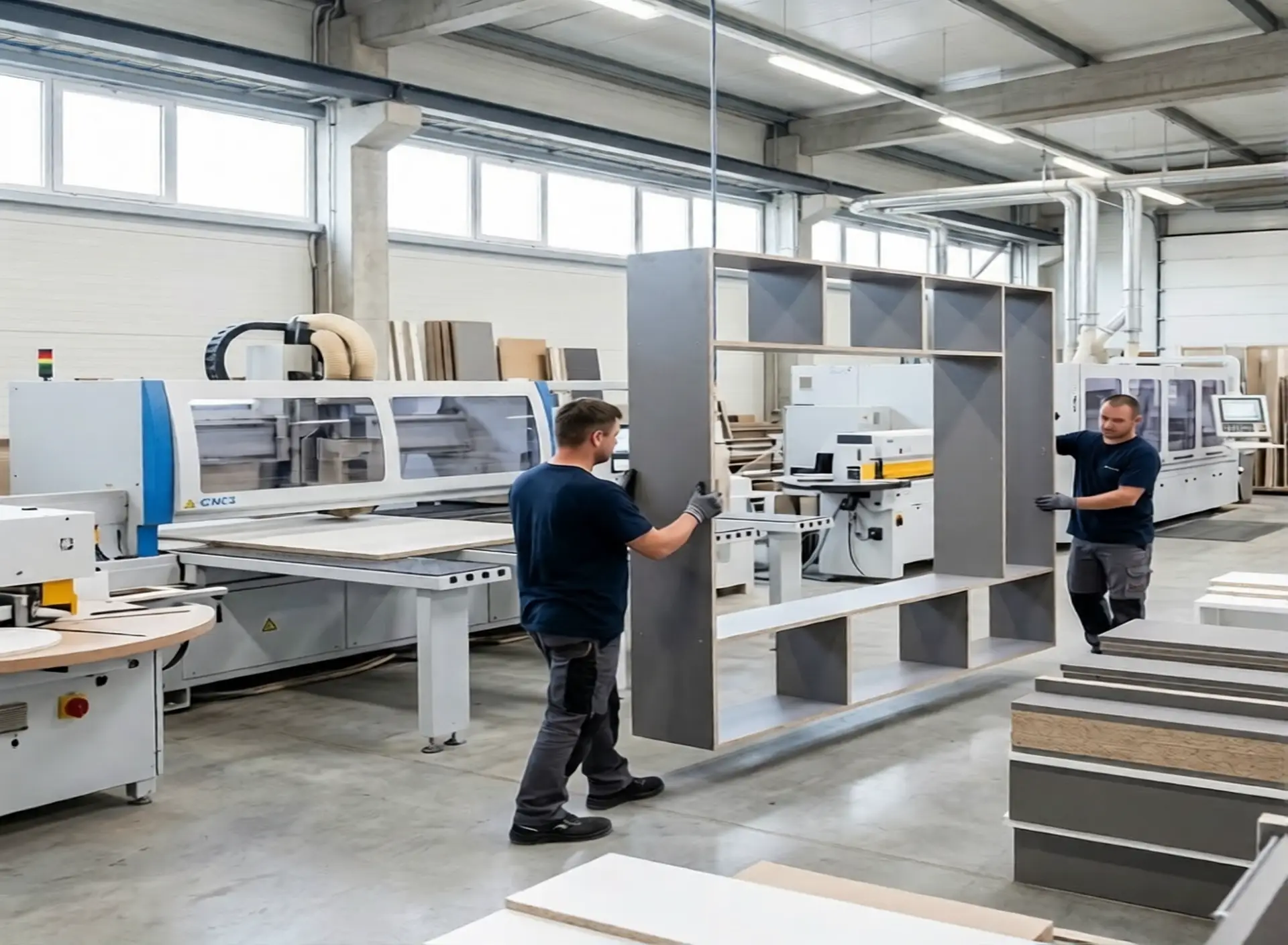
Precision matters more in small spaces, and engineered board delivers it. In a small home, a wardrobe that’s even a couple of centimeters off can mean the difference between a door that closes properly and one that scrapes the wall every time. Particleboard is manufactured to consistent, exact dimensions, which makes it far easier to build modular furniture that fits precisely into tight corners, awkward alcoves, and under-window spaces that solid wood, with its natural variation, doesn’t handle nearly as predictably.
Modular design basically depends on it. Multi-functional furniture beds with storage underneath, foldable study tables, wardrobes with built-in shelving systems, and wall-mounted units are the backbone of compact-home living. Almost all of it is built around flat, uniform panels that can be engineered to exact specifications. Particleboard, especially in pre-laminated form, is close to ideal for this kind of design since it’s flat, predictable, and easy to manufacture at scale in standardised sizes.
It doesn’t blow the budget on furniture that gets replaced often. Renters move. Young professionals change cities for jobs. Small families upgrade to bigger homes within a few years as circumstances change. In all of these situations, furniture that’s replaced or reworked every few years doesn’t justify a heavy investment in solid wood. Particleboard furniture offers a genuinely functional, good-looking option at a price point that makes sense for people who aren’t planning to keep the same wardrobe for the next thirty years.
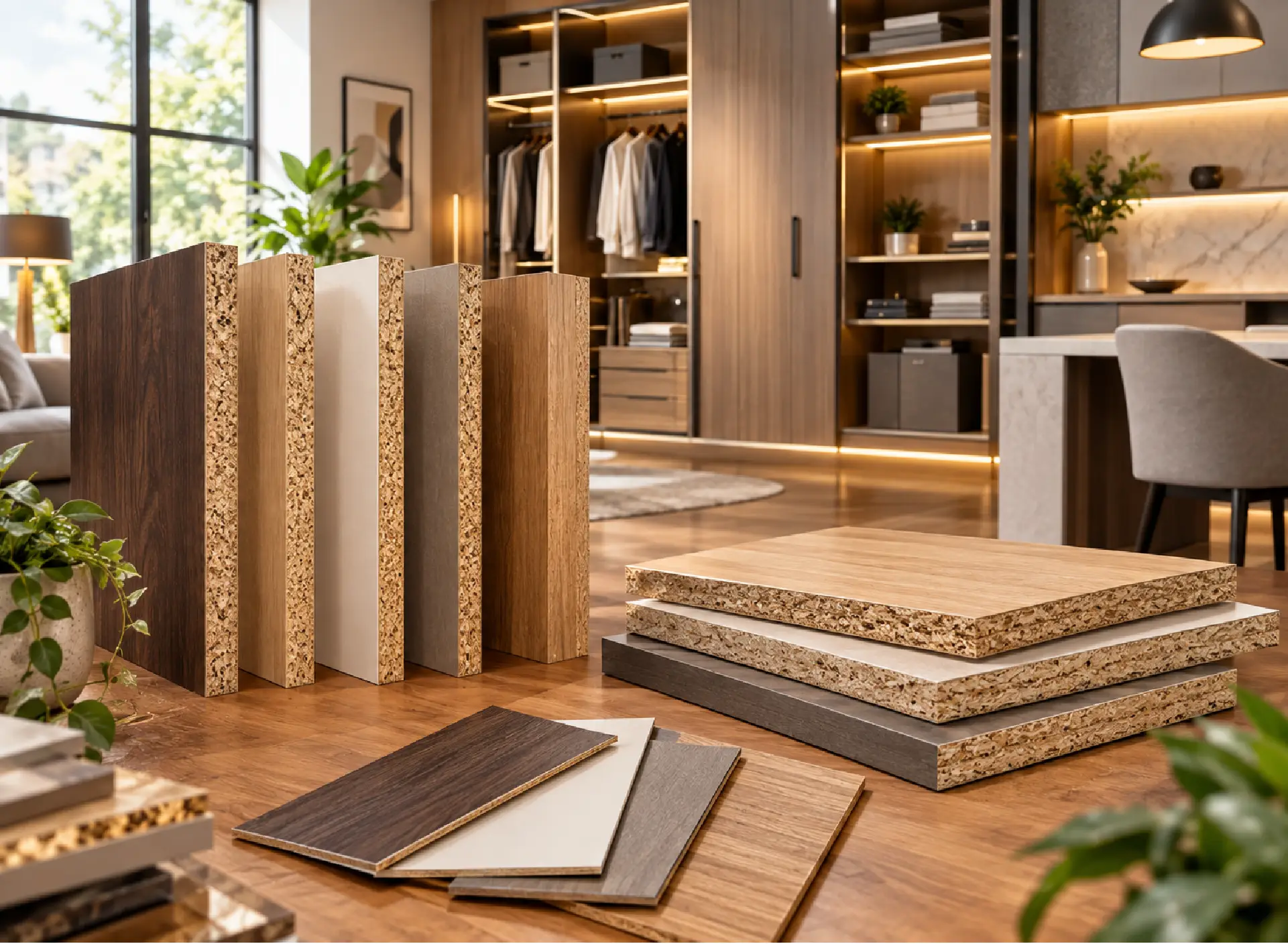
Finish options keep small spaces looking bigger, not cluttered. Pre-laminated particleboard comes in a wide range of finishes: light woodgrains, matte pastels, and high-gloss whites, all of which play a real role in how spacious a small room feels. Lighter, uniform finishes tend to open up a compact room visually in a way that heavier, darker solid wood often doesn’t.
The Compact Kitchen Angle
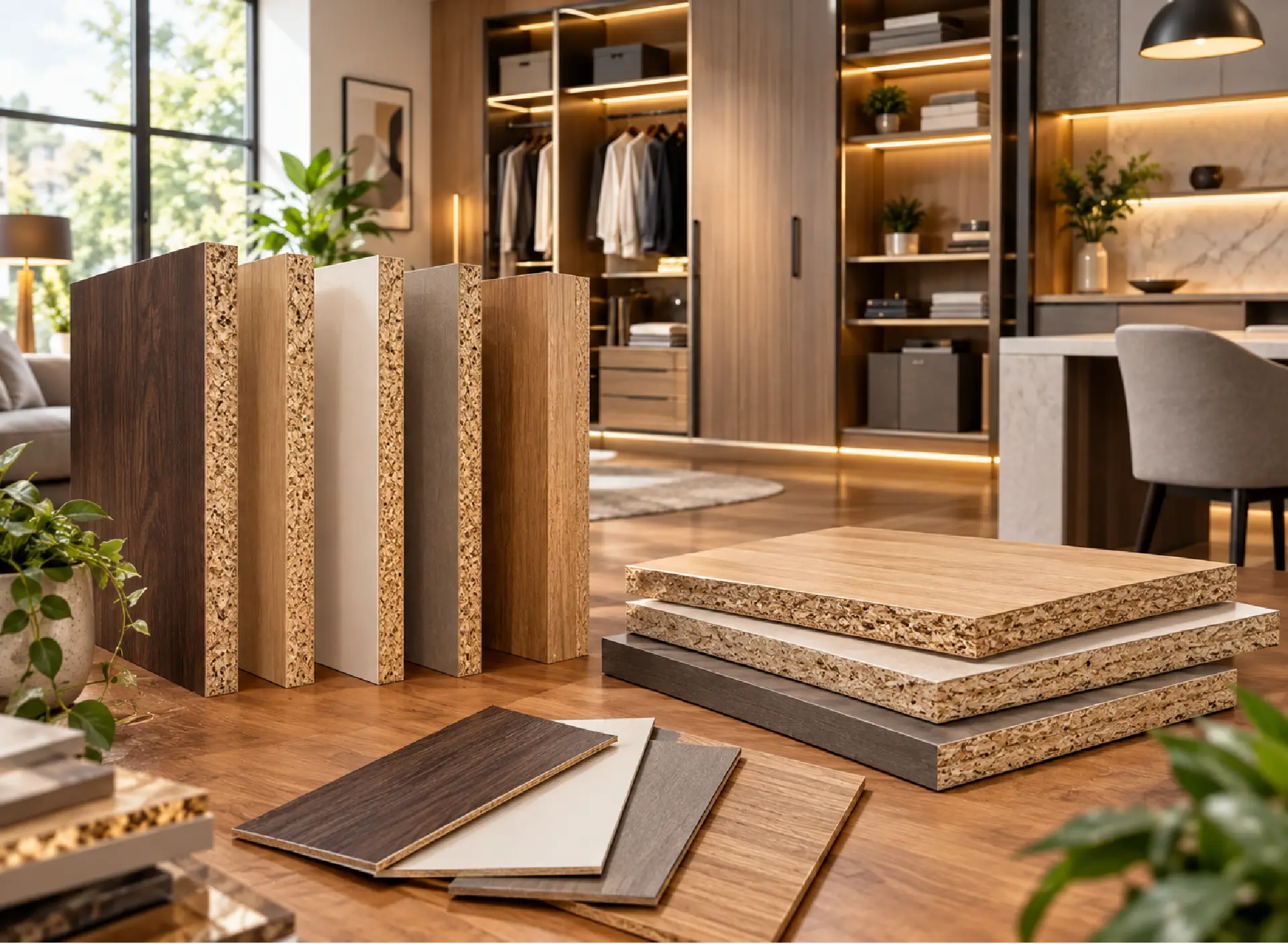
Nowhere is this more obvious than in modular kitchens, which have become almost the default in new compact apartments. Cabinet manufacturers rely heavily on pre-laminated particleboard because it allows for exact, repeatable panel sizes across dozens of cabinet units, something that would be far more expensive and time-consuming to achieve with solid wood, especially in kitchens where every centimeter of counter and storage space has been carefully planned out in advance.
Not Just a Budget Choice Anymore
It’s worth pushing back on one assumption here: particleboard furniture isn’t just the “cheaper alternative” people settle for because they can’t afford solid wood. For compact homes specifically, it’s often the more sensible choice on its own merits: lighter, more precisely dimensioned, easier to adapt into multi-functional pieces, and available in a wider range of finishes that suit smaller, more visually sensitive spaces.
Interior designers working on small-format homes have picked up on this too. Many of the clean, minimal, Scandinavian-inspired interiors that are currently popular in compact apartments are primarily constructed from engineered wood panels instead of solid timber. This choice is often because engineered wood naturally complements the flat, streamlined aesthetic that these designs emphasize.
What to Check Before You Buy
If you’re furnishing a compact home with particleboard furniture, a few practical points are worth keeping in mind:
Look for a three-layer board rather than a single-layer one, since it holds up noticeably better over years of regular use and repeated moving. If the furniture is going anywhere near a kitchen or bathroom, ask specifically about moisture resistance; small homes often mean furniture placed closer to damp-prone areas than you’d ideally like. And if you want a fast turnaround with no extra finishing work, pre-laminated board is generally the easier route, especially for renters or anyone setting up a home on a tight timeline.
