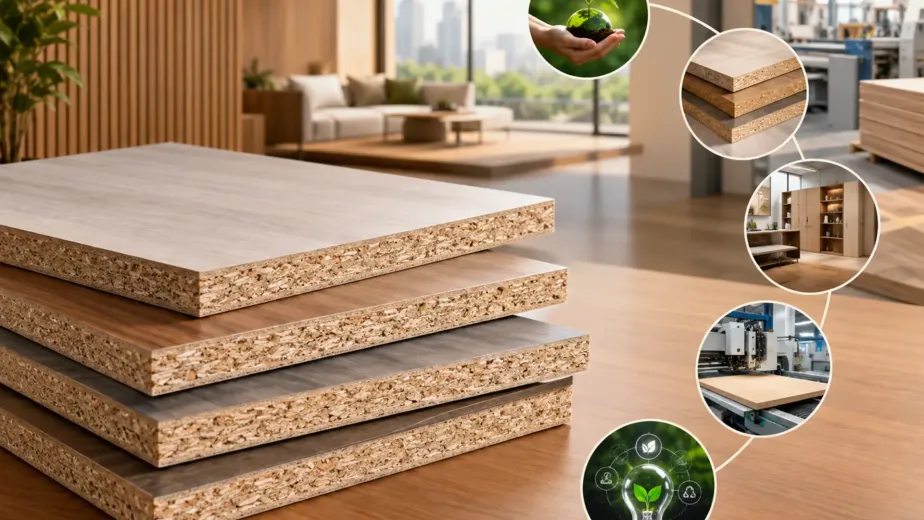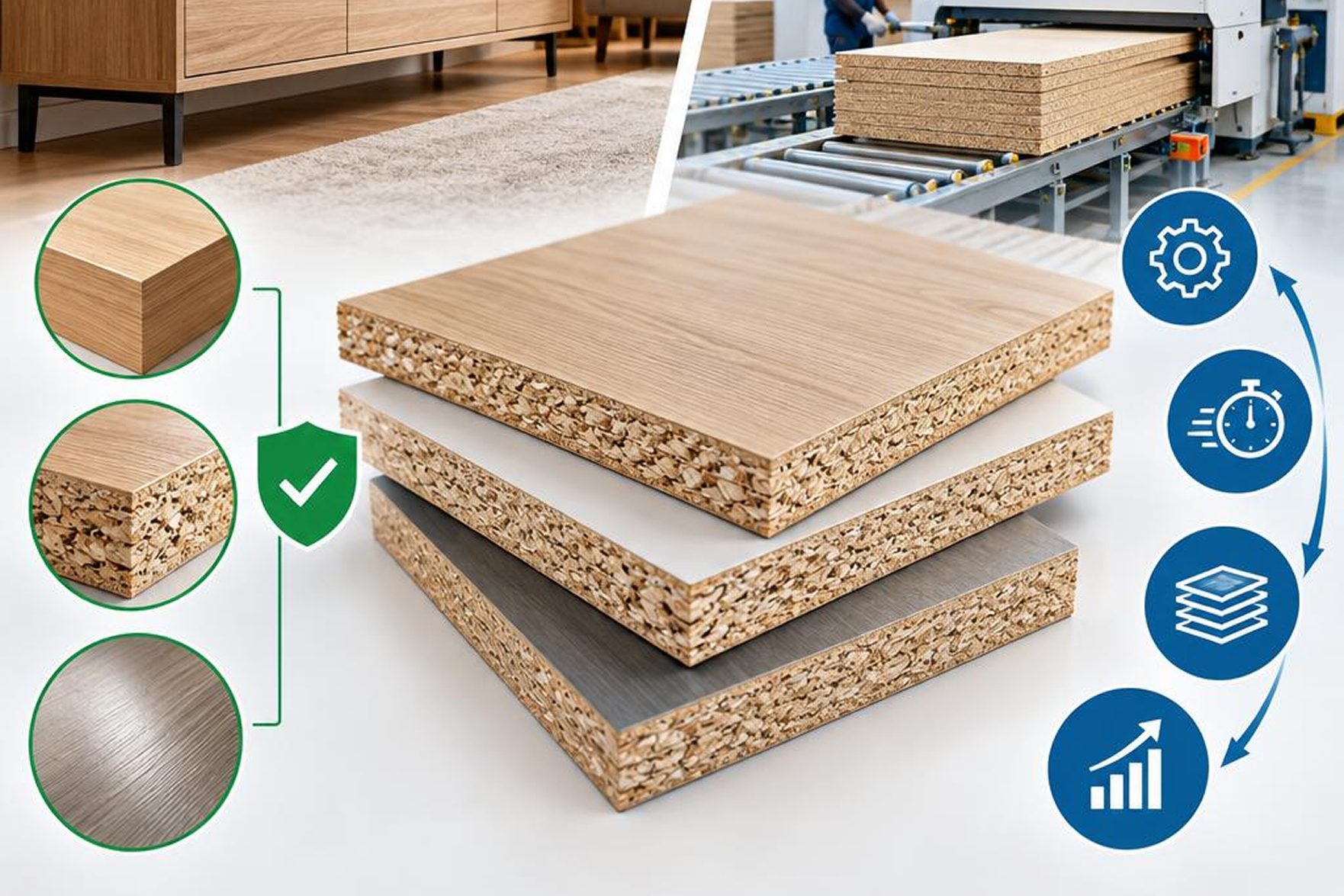
Ask most furniture manufacturers what drives their margins and their reputation, and you’ll hear about design, finishing, hardware, maybe even marketing. Rarely does anyone lead with the board itself. And yet, if you actually trace back where most quality issues, production delays, and cost overruns originate, a surprising number of them start with one decision made long before a single cut is made: which particleboard got ordered in the first place.
It’s not the most exciting part of the furniture-making process. But it might be the most consequential.
Why the Board You Choose Shapes Everything Downstream
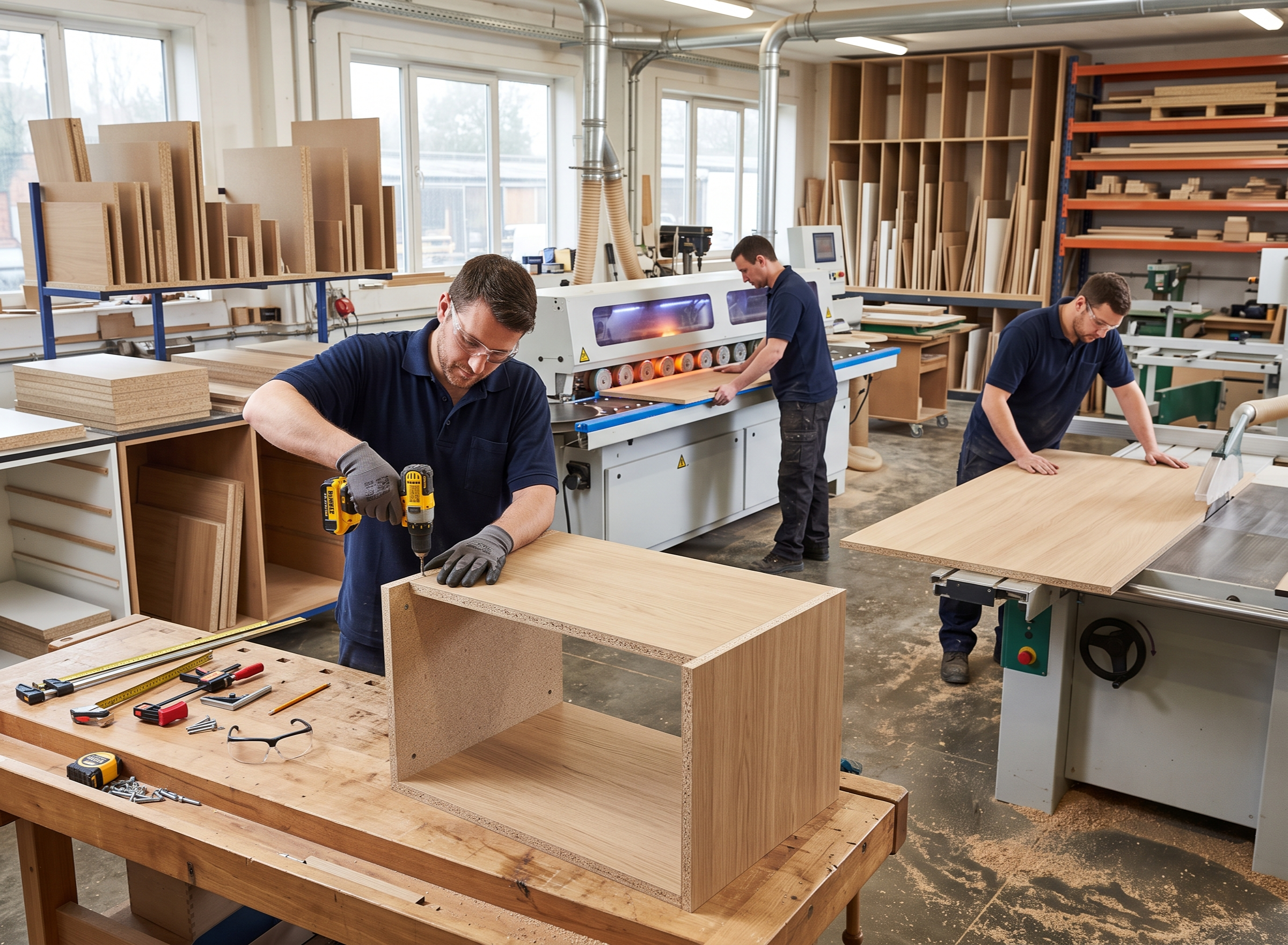
Furniture manufacturing is really a chain of dependent steps: cutting, edge-banding, drilling, assembly, finishing. Each stage assumes the board coming into it behaves predictably. The moment that assumption breaks, problems start compounding.
Inconsistent board density causes drill bits and cutting tools to behave differently across the same sheet, leading to rough edges in some spots and clean cuts in others. Uneven moisture content causes warping that might not show up until the piece is already assembled. Poor resin bonding shows up as delamination weeks or months after installation, long after the furniture has left the factory and any goodwill has left with it.
None of these are design flaws. They’re board-quality problems wearing a design-flaw costume and are avoidable with the right raw material.
Where Quality Board Actually Saves Production Time
Fewer tool changes, less machine wear. Boards with consistent density and properly cured resin cut and drill far more predictably. Operators spend less time adjusting for inconsistent material, and cutting tools last longer when they’re not fighting variable density across every sheet. Over a full production run, this adds up to real time saved, not just a marginal convenience.
Less rework, fewer rejects. A board that’s dimensionally accurate and properly flat reduces the number of pieces that fail quality checks mid-process. Every panel that gets rejected after cutting or edge-banding represents wasted material, wasted labour, and wasted machine time costs that don’t show up as a single line item but quietly erode margins across a production run.
Predictable lamination and finishing. Pre-laminated boards manufactured under properly controlled heat and pressure bond far more reliably than boards where lamination quality varies sheet to sheet. Manufacturers working with inconsistent boards often build in extra buffer time for finishing defects buffer time that simply isn’t necessary when the input material is reliable.
Fewer field failures, fewer costly returns. This is the one that hurts the most because it happens after the sale. A batch of furniture that ships out looking fine but starts swelling, sagging, or delaminating within months generates warranty claims, replacements, and reputational damage that costs far more than what was “saved” by sourcing cheaper boards in the first place
Quality Isn't Just About Strength, It's About Consistency
Many mistakenly assume that board quality centers purely on the strength or durability of an individual sheet. In a manufacturing context, consistency across sheets matters just as much, if not more. A production line running hundreds or thousands of panels needs every sheet to behave the same way under the same cutting parameters, the same drilling settings, the same lamination process.
This is where three-layer construction earns its reputation. Finer particles on the outer layers create a smoother, more workable surface that takes finishing consistently well, while a coarser core layer delivers the structural strength needed for load-bearing furniture and does so uniformly, sheet after sheet, when manufactured properly at scale.
Manufacturers producing at real volume, with tightly controlled drying, resin blending, and pressing stages, are simply better positioned to deliver that sheet-to-sheet consistency than smaller, less standardised operations. For a furniture manufacturer trying to hit production targets without a spike in rejects, that consistency is worth more than almost any other single specification.
The Efficiency Case Is Really a Cost Case
It’s tempting to treat board quality and production efficiency as separate conversations one about output quality, the other about the bottom line. In practice, they’re the same conversation. Every hour lost to rework, every rejected panel, every warranty claim traces back to a cost that never appears as its own line item but shows up clearly enough in quarterly numbers if you know where to look.
Manufacturers who’ve made the switch to higher-consistency board often describe the change less in terms of “better furniture” and more in terms of fewer surprises fewer machine stoppages, fewer quality-control flags, fewer calls from customers about furniture that didn’t hold up as expected. That’s really what efficiency looks like on a factory floor: not doing something dramatically differently, just doing it without constant interruption
What to Look for When Sourcing Board for Production
A few specifications are worth prioritising when evaluating boards for manufacturing use, beyond just price per sheet.
Density consistency across a batch matters more than peak density in a single sheet a manufacturer needs predictability across hundreds of panels, not just strong performance on one sample. Moisture content should sit within a tight, verified range, since this directly affects both immediate workability and long-term stability once the furniture is in use. Resin bonding quality is worth asking about directly, since it determines both cutting behaviour and long-term resistance to delamination. And supplier scale genuinely matters here manufacturers running proper large-volume, quality-controlled production are far more likely to deliver batch-to-batch consistency than smaller operations without the same process discipline.
The Bottom Line
The board isn’t just a raw material line item on a purchase order it’s the foundation every subsequent production step depends on. Choosing a board for its consistency, not just its price, tends to pay for itself many times over in reduced rework, fewer rejects, smoother finishing, and far fewer complaints once furniture reaches the customer.
For manufacturers looking to improve both product quality and production efficiency at the same time, the answer often isn’t a new machine or a process overhaul. It’s further upstream than that it starts with the board.