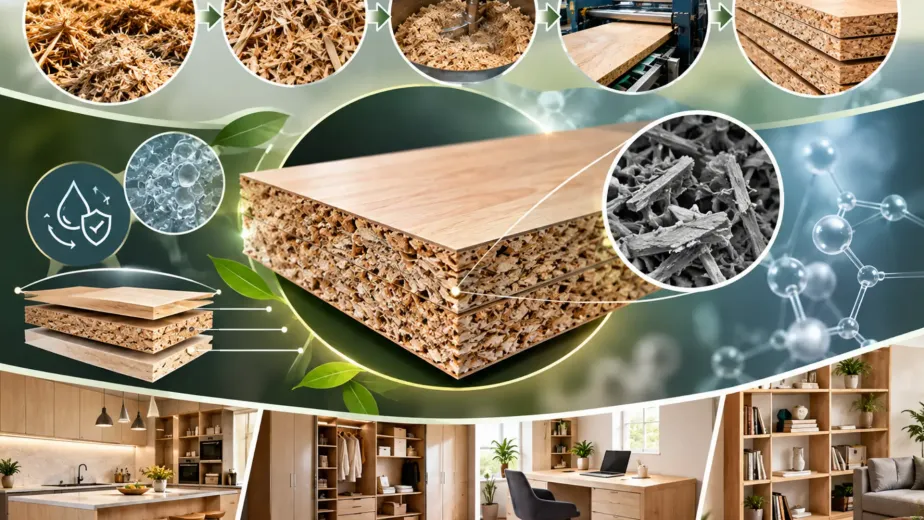
If you’ve ever stood in front of a supplier’s catalogue trying to decide between pre-laminated and plain particleboard, you know the choice isn’t as simple as it first looks. Both use the same core material. Both can end up in the same wardrobe, kitchen cabinet, or office desk. Yet the decision between them can quietly add days to your project timeline or shave a noticeable chunk off your budget, depending on which way you go.
Let’s break down what actually separates the two, and which one makes more sense depending on what you’re building.
What's the Actual Difference?
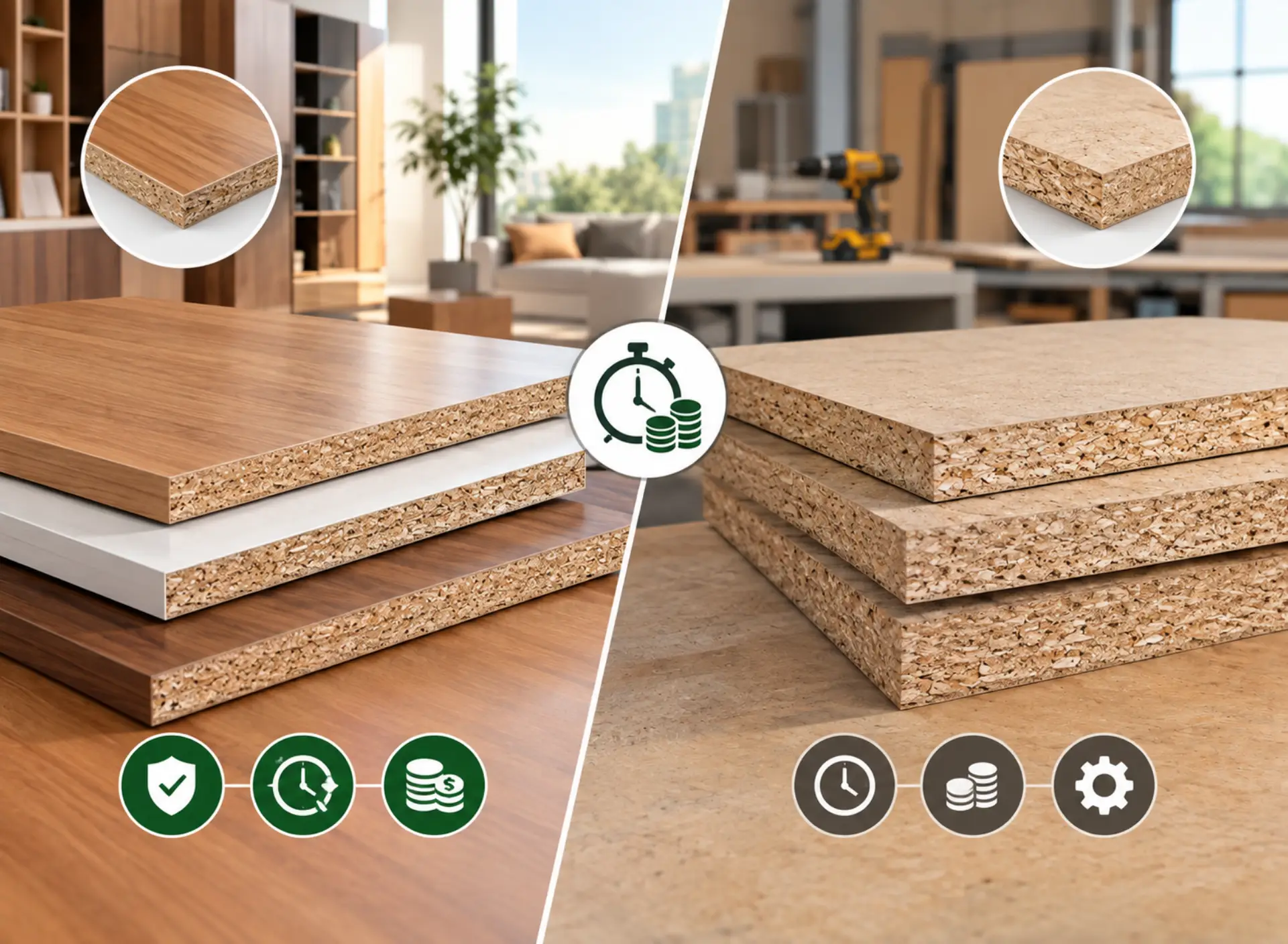
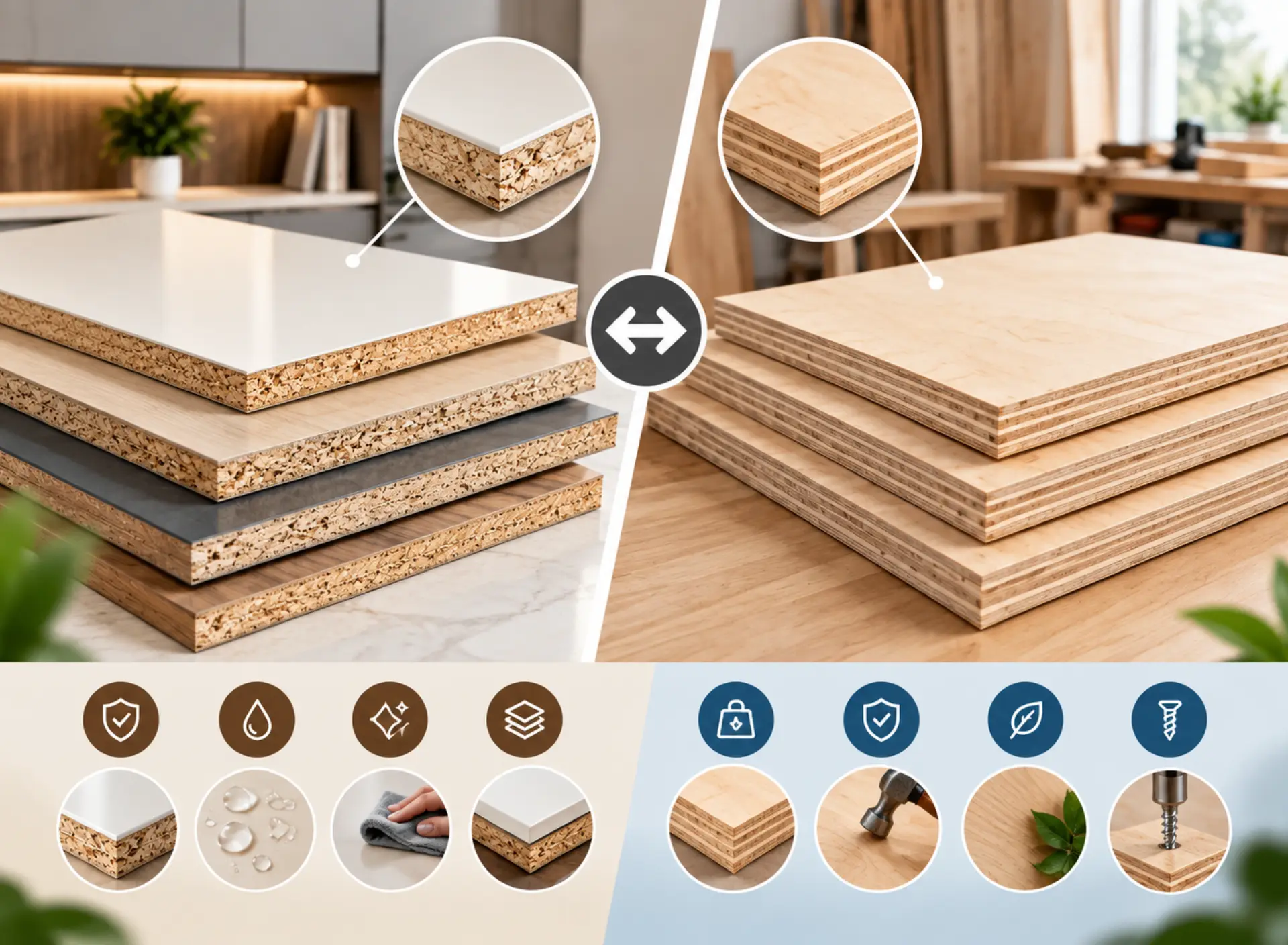
Plain particleboard is exactly what it sounds like: a flat, pressed board made from wood or agro-waste particles bonded with resin, with no surface finish applied. It comes out of the factory ready to be cut, but not ready to be seen. Before it goes into a piece of furniture, it needs a top layer: laminate, veneer, paint, or some other finish, usually applied by a carpenter or a separate finishing unit.
Pre-laminated board skips that extra stage. The lamination, a decorative and protective layer, often in wood-grain finishes or solid colours, is bonded onto the board during manufacturing, under heat and pressure, so it arrives finish-ready. Cut it to size, edge-band it, and it’s good to install.
That one difference in when the finish gets applied is where almost all the practical distinctions between the two come from.
Where Pre-Laminated Board Wins
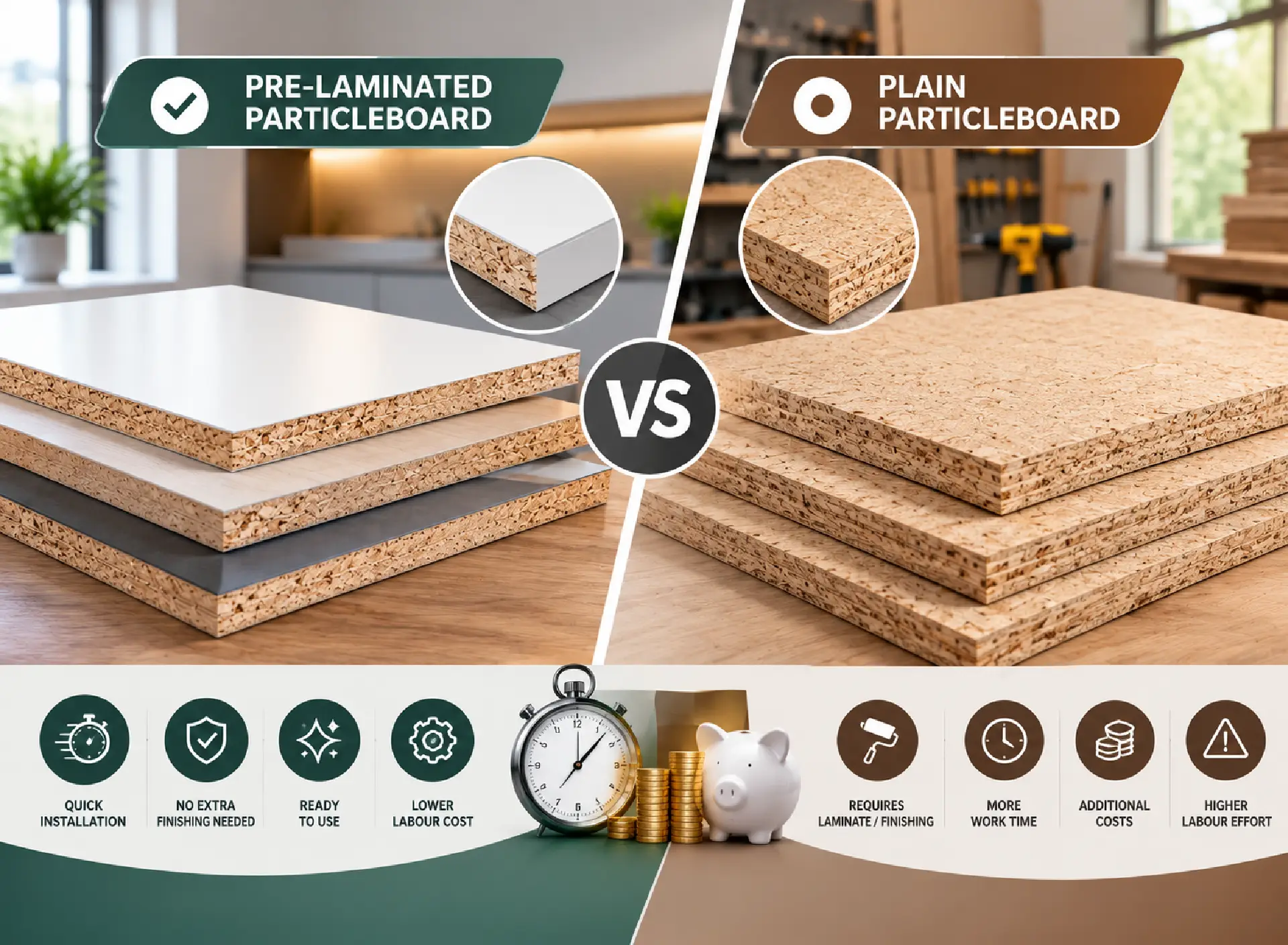
Speed. This is the single biggest advantage. Since the surface finish is already done, there’s no waiting for lamination, no drying time for adhesives, and no separate finishing step at the carpenter’s workshop. For modular furniture, kitchens, wardrobes, and office cabinetry, this can cut days off a project that would otherwise involve back-and-forth between cutting, finishing, and assembly.
Labour cost. Skilled labour for laminating and polishing isn’t cheap, and it isn’t always consistent in quality either. Pre-laminated board removes that labour requirement almost entirely, which matters a lot on large projects where finishing dozens of panels by hand adds up in both cost and time.
Consistency. Because lamination happens under factory-controlled conditions, the finish tends to be more even and durable than what’s achievable with manual, on-site lamination. Fewer bubbles, fewer inconsistencies, less risk of peeling down the line.
Simplicity for smaller projects or DIY use. If you’re building something yourself-a bookshelf, a study table, a small storage unit-pre-laminated board means you’re not relying on a carpenter’s finishing skills at all. What you buy is close to what you get.
Where Plain Board Wins
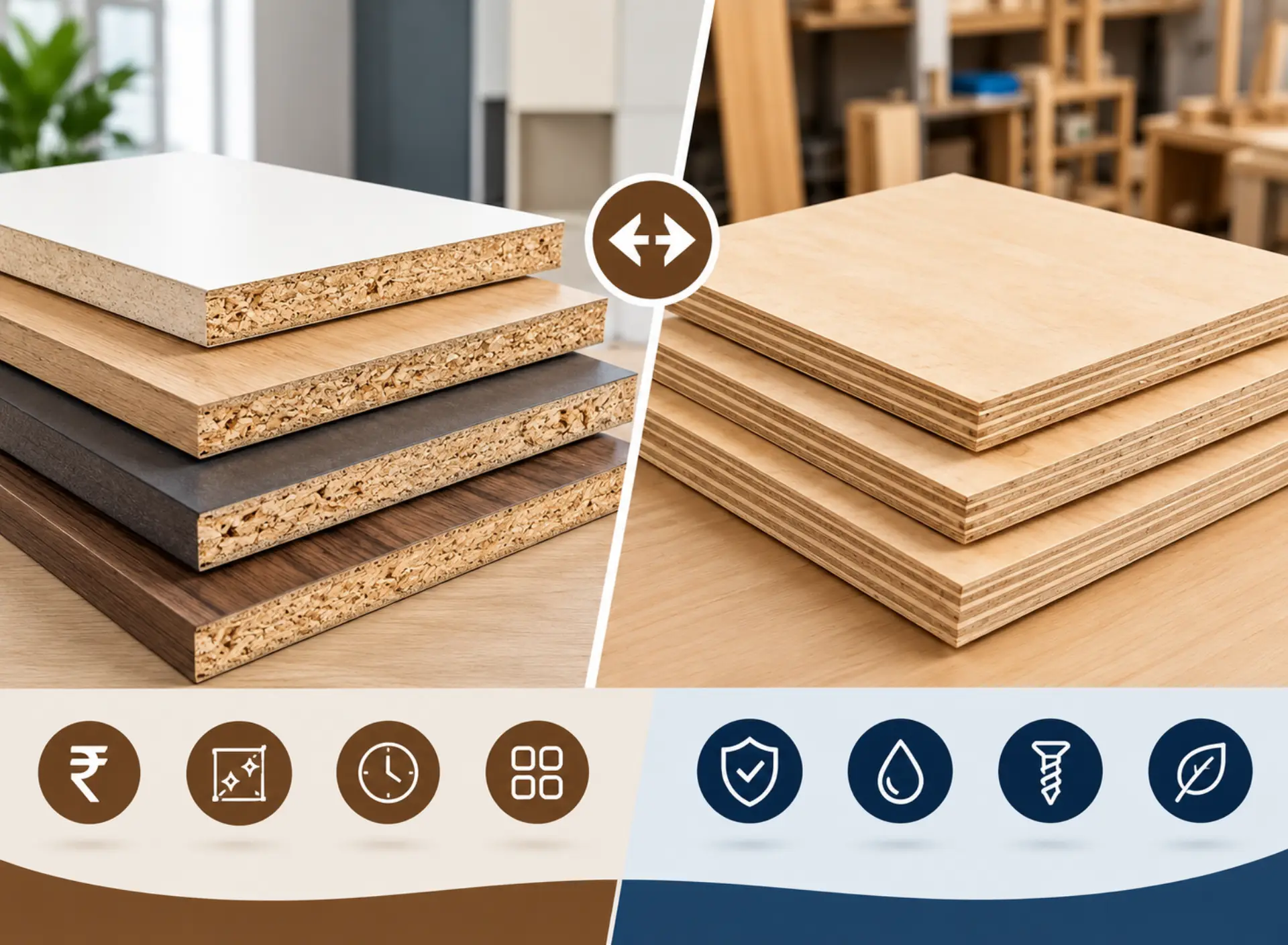
Design flexibility. This is plain board’s biggest strength. Since the finish hasn’t been decided yet, you have full control over what goes on top: any laminate brand, any colour, any veneer, any texture. For interior designers or clients with a specific aesthetic in mind, this flexibility can matter more than the time saved by going pre-laminated.
Better for curved or complex shapes. Pre-laminated sheets are, unsurprisingly, made for flat panel use. If a project involves curves, mouldings, or intricate detailing, plain board finished on-site gives craftsmen room to work with the material in ways a factory-applied laminate doesn’t allow.
Repair and rework. If a plain board panel gets damaged during a long project, refinishing it is relatively straightforward: sand it down, reapply the finish. With pre-laminated board, damage to the surface layer often means replacing the entire panel, since the lamination isn’t something you can easily redo on-site.
Cost per unit can be lower upfront. Plain board itself is usually cheaper to buy than pre-laminated board, since you haven’t paid for the lamination yet. Whether this actually saves money depends entirely on what you spend afterwards on finishing labour and materials, which is really the crux of this whole comparison.
So Which One Actually Saves Time and Money?
The honest answer: it depends on the scale and nature of the project, not on which product is inherently “better.”
For modular, repetitive work- kitchen cabinets, wardrobe shutters, office furniture, retail fixtures- pre-laminated board tends to win on both time and total cost, once you factor in labour, finishing materials, and the reduced risk of finishing defects. The upfront price per sheet might be slightly higher, but the savings downstream usually outweigh that difference, especially at volume.
For custom, design-led, or one-off projects- a bespoke piece of furniture, curved detailing, a specific veneer finish, or when a client has requested plain board- it is usually the smarter route. You’re paying for flexibility and craftsmanship rather than speed, and trying to force a pre-laminated panel into a highly customised design often costs more in wasted material and compromise than it saves in time.
There’s also a middle consideration worth mentioning: project timelines. If a client needs a kitchen installed in a week, pre-laminated board is often the only realistic option. If the timeline is more relaxed and the client wants a specific bespoke look, plain board opens up possibilities pre-laminated simply can’t match.
A Quick Way to Decide
Ask three questions before choosing:
- Is the design flat and repeatable, or custom and detailed? Flat and repeatable favours pre-laminated. Custom and detailed favours plain.
- How tight is the timeline? Tight timelines almost always favour pre-laminated board.
- Do you have reliable access to good finishing labour? If not, pre-laminated removes that dependency altogether.
The Bottom Line
Neither option is universally cheaper or faster; it genuinely depends on what you’re building and how. Pre-laminated board is the practical choice for speed, consistency, and lower labour dependency, particularly on modular and large-scale work. Plain board earns its place when the project calls for customisation, unusual shapes, or a very specific finish that only on-site work can achieve.