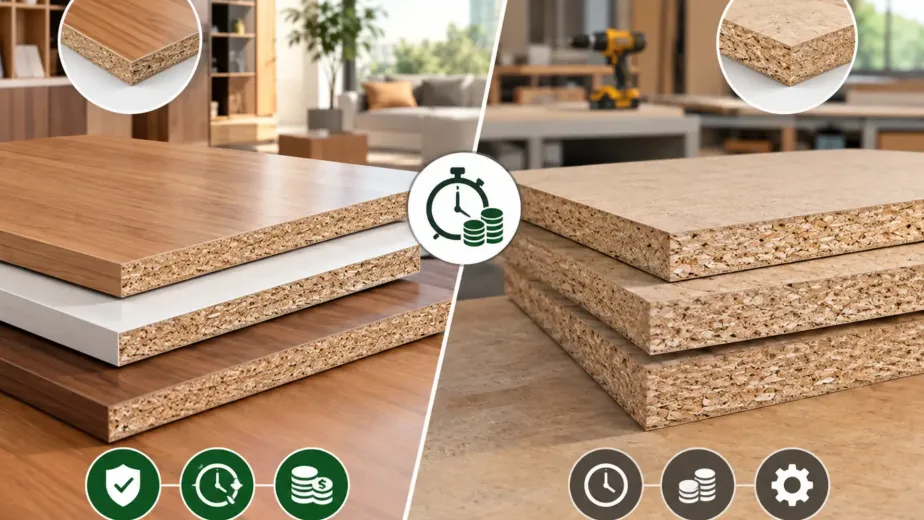
Most people size up furniture the same way they’d judge a book by its cover. Does the finish look nice? Does the door swing shut without a fight? Does it feel solid when you rap your knuckles in the showroom? Almost nobody thinks to ask what’s actually going on inside that flat, unassuming board. Yet that’s exactly what decides whether the piece survives five years or twenty.
Strength and durability in particleboard don’t just happen. Nobody presses wood particles together, crosses their fingers, and hopes it works out. There’s genuine engineering behind every good board, and once you understand even a bit of it, it becomes obvious why some furniture lasts decades while other pieces start falling apart within a year.
Particle Size Isn't Random, It's Deliberate
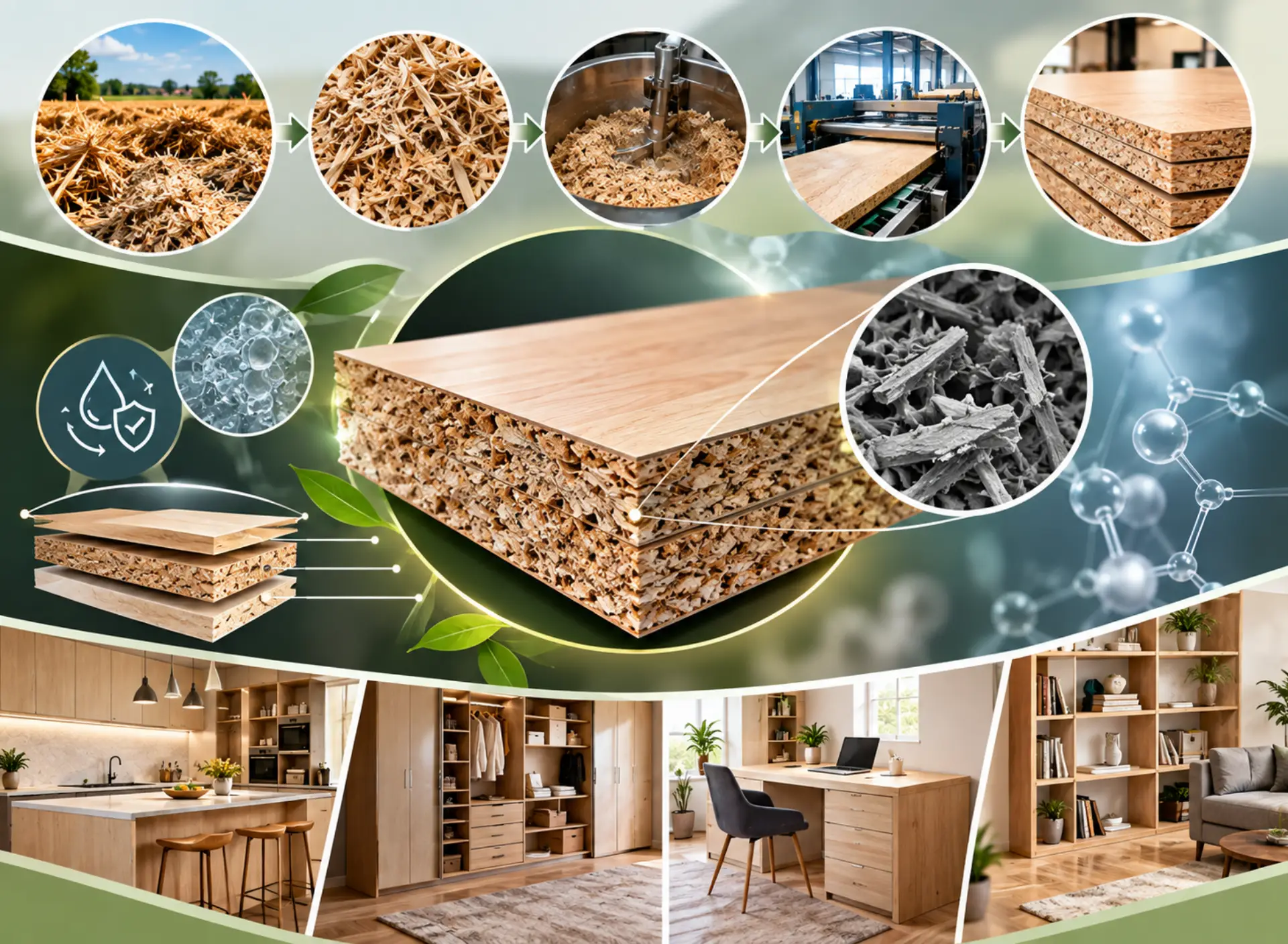
Not every particle inside a board is the same size, and that’s on purpose. Particle size, shape, and distribution all affect how the board performs under weight and pressure. Bigger particles leave more air pockets between them, which helps with strength but hurts smoothness. Smaller particles pack tighter and give you a workable surface, but they don’t do much for load-bearing on their own.
So instead of using one particle size from top to bottom, good manufacturers mix it up on purpose. Finer stuff goes where the surface needs to look and feel smooth. Chunkier stuff goes wherever the board actually needs to hold weight.
Why Three Layers Beat One
Anyone who’s ever looked closely at a cut edge of decent particleboard has probably noticed something — it isn’t the same all the way through. There’s a clear line between the two outer layers and whatever’s sitting in the middle, and that’s not a manufacturing shortcut. It’s intentional.
The outer layers, made from finer particles, are what accept lamination, veneer, or paint. Because those particles sit closer together, the surface comes out smoother and takes finishing better. The core in between, built from coarser material, does something completely different— it fights off bending, sagging, and warping when the board is under actual load.
Put it all together, and you basically get a board acting like a composite, where each layer brings something different to the table. A single-layer board doesn’t have that luxury. It has to split the difference between looking good and holding weight, because it can’t chase both goals at the same time the way a properly layered board can.
The Glue Matters More Than You'd Think
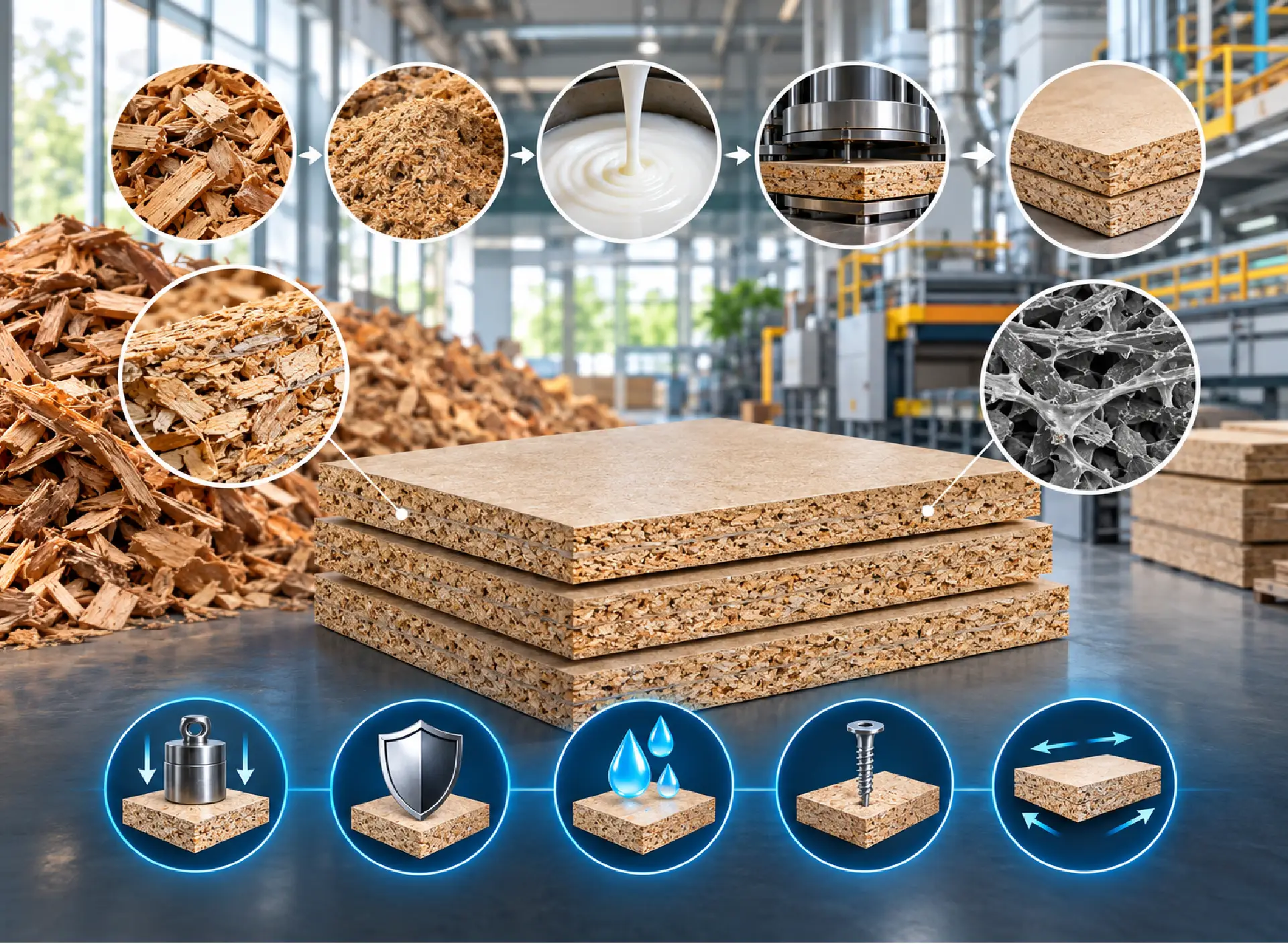
Something has to hold all those particles together once they’re layered up, and that’s resin’s job. But calling it “just glue” undersells what’s actually happening. The type of resin, how much gets used relative to the wood particles, and how evenly it spreads across the board all shape the final result — strength, moisture resistance, how long the thing actually lasts.
Skimp on resin and you get particles that barely stick to each other, which shows up as crumbling or delamination the moment the board is put under any real stress. If you use too much resin, you’re not only wasting money; you’re also increasing formaldehyde emissions to levels that are undesirable in a home. Nailing that ratio, and making sure it’s spread evenly instead of pooling in some spots while leaving others starved, is genuinely one of the trickier parts of the entire process.
Heat and timing matter just as much here. Resin needs proper heat and enough time under pressure to actually cure the way it’s supposed to. A board pressed for too short a time, or at the wrong temperature, can look completely normal on the outside while being noticeably weaker underneath. A flaw that’s basically invisible until the board’s already been living in someone’s home for a while.
Moisture Is the Quiet Factor Nobody Talks About
Wood particles pull moisture out of the air and release it back depending on what’s around them. That’s just how they’re built, whether they came from timber or leftover crop residue. And if moisture isn’t kept in check during manufacturing, you don’t see the fallout right away. It shows up much later, usually as warping, swelling, or a board that’s slowly losing whatever strength it started with.
That’s exactly why drying gets treated as a carefully monitored step rather than something eyeballed and moved past quickly. Particles have to sit at a specific moisture level before resin goes on, because resin simply won’t bond right to something that’s too wet or bone dry. And for anything headed into a kitchen or bathroom, there’s often an extra treatment step built in specifically to help the board fight off humidity and water absorption over the years.
One Number That Sums It All Up: Density
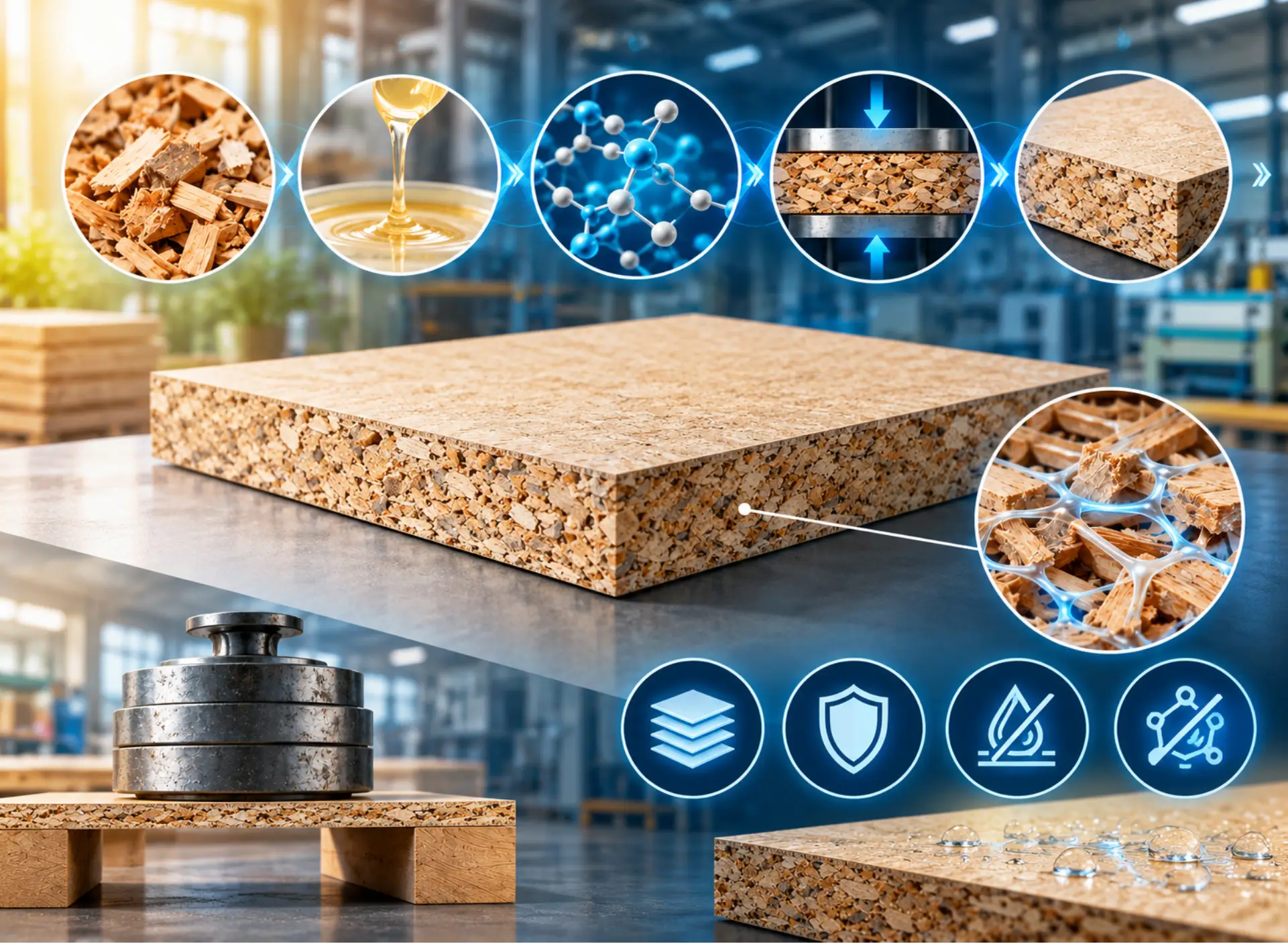
If you had to pick a single measurement that reflects how well everything above actually came together, it would be density. It tells you how tightly the particles are packed and how well the resin has bonded them, and it lines up closely with strength, how well the board grips screws, and how much abuse it can take before showing damage.
Higher density usually means a stronger board, though it’s not simply a “more is better” situation; weight and cost climb along with it, and pushing density higher than a piece of furniture actually needs just adds material cost without giving you much in return. That’s why manufacturers target a specific density range suited to how the board will actually be used, rather than maxing it out across the board regardless of application.
Why Any of This Should Matter to Someone Buying Furniture
Nobody needs to memorise this before walking into a furniture store. But knowing there’s real science behind board strength explains why price differences between boards aren’t arbitrary. A board built with real attention to particle sizing, layering, resin chemistry, moisture control, and density is a genuinely different product from one where any of these steps got rushed, even if both look identical sitting side by side.
That’s also why quality tends to reveal itself slowly instead of right away. Two wardrobes can look equally solid the day they’re bought and then age completely differently after a few years of humidity and daily use purely because of decisions made on a factory floor months before either one ever reached a store.
The Bottom Line
Strength and durability in particleboard don’t happen by accident. They’re the product of real material science: particle sizing, layered construction, resin chemistry, moisture control, and density all working together. Get each one right, and you end up with furniture that holds up for decades. Rush even one, and you end up with furniture that quietly starts failing within a couple of years.
Next time a piece of furniture feels sturdier than expected or flimsier than it should, there’s a good chance the real explanation has nothing to do with the design or the finish. It’s the science sitting quietly inside the board itself.